Exhibition on view
Tuesday-Saturday 1-5
June 23 through October 17, 2026
except closed August 4 and September 30
Opening Reception July 10
As the USA commemorates the 250th anniversary of the Declaration of Independence, we invite you to explore and celebrate the legacy of Taos in shaping the national identity. In 1915, six artists formed the Taos Society of Artists (TSA) with the expressed goal of creating an “authentically American” art. What did that mean?
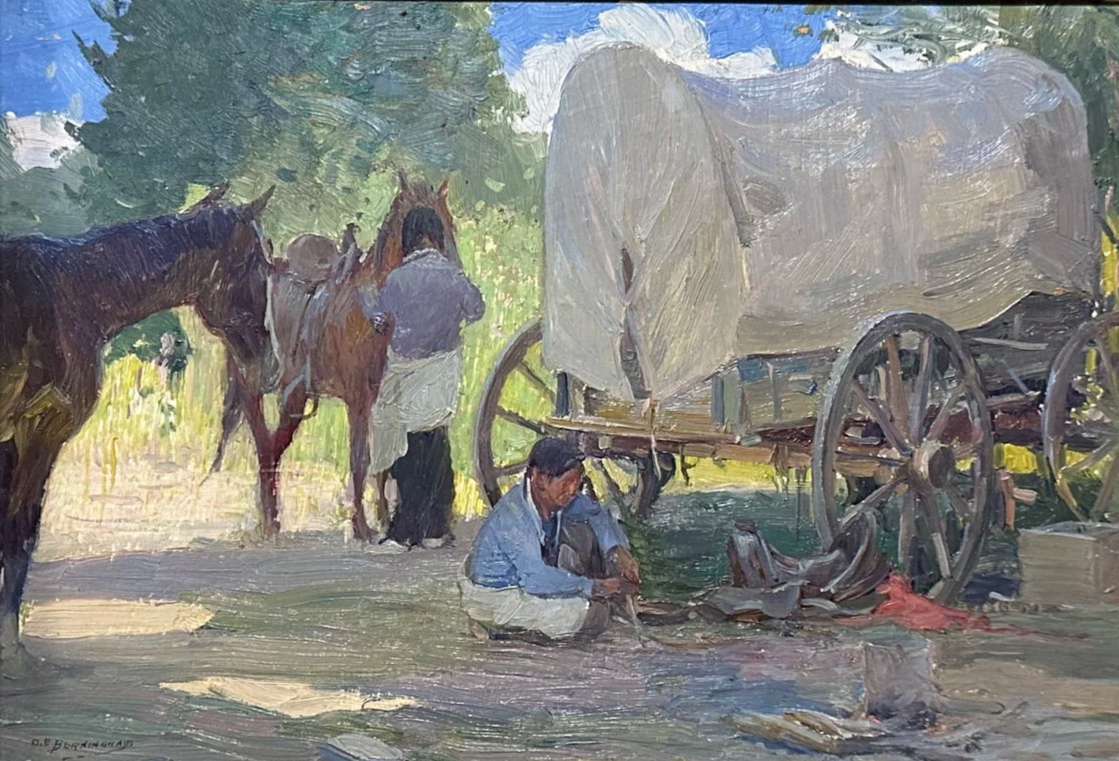
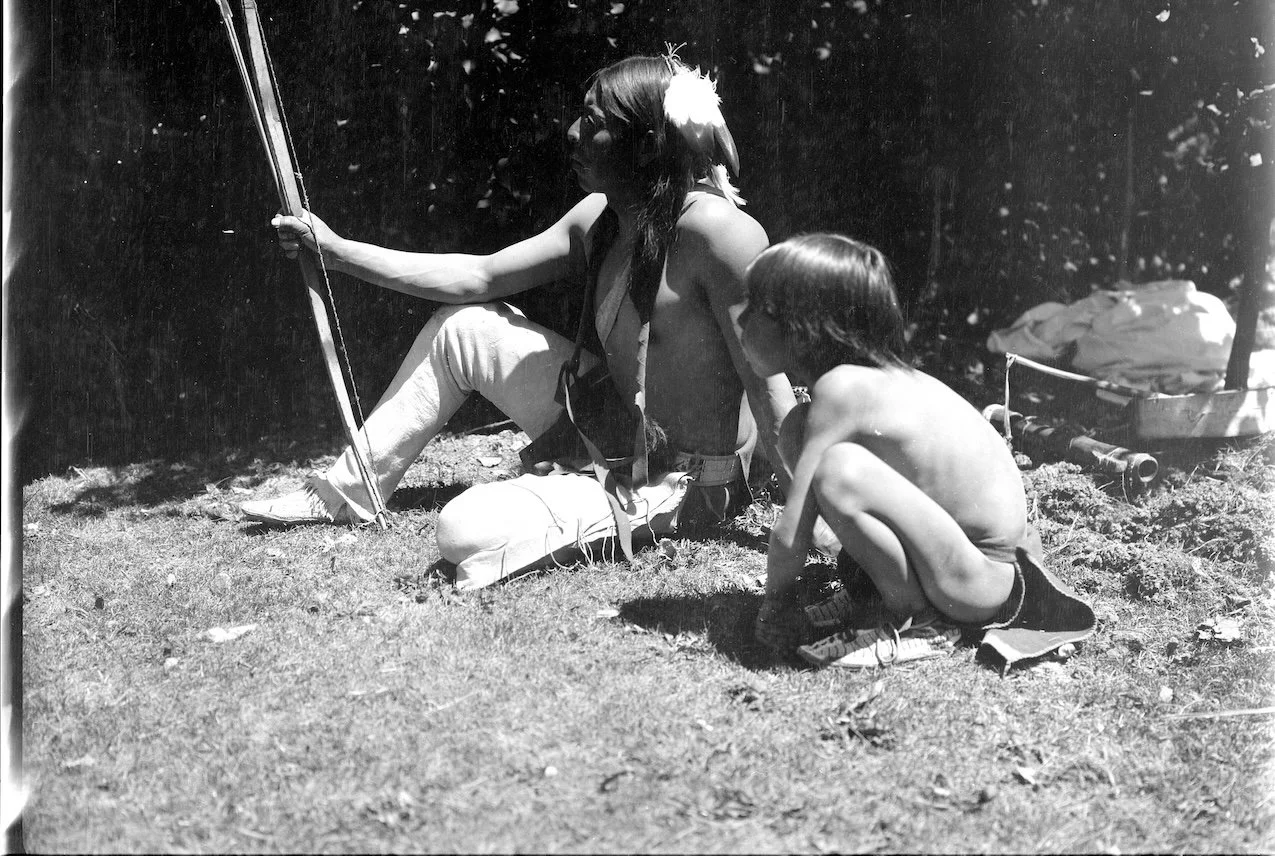
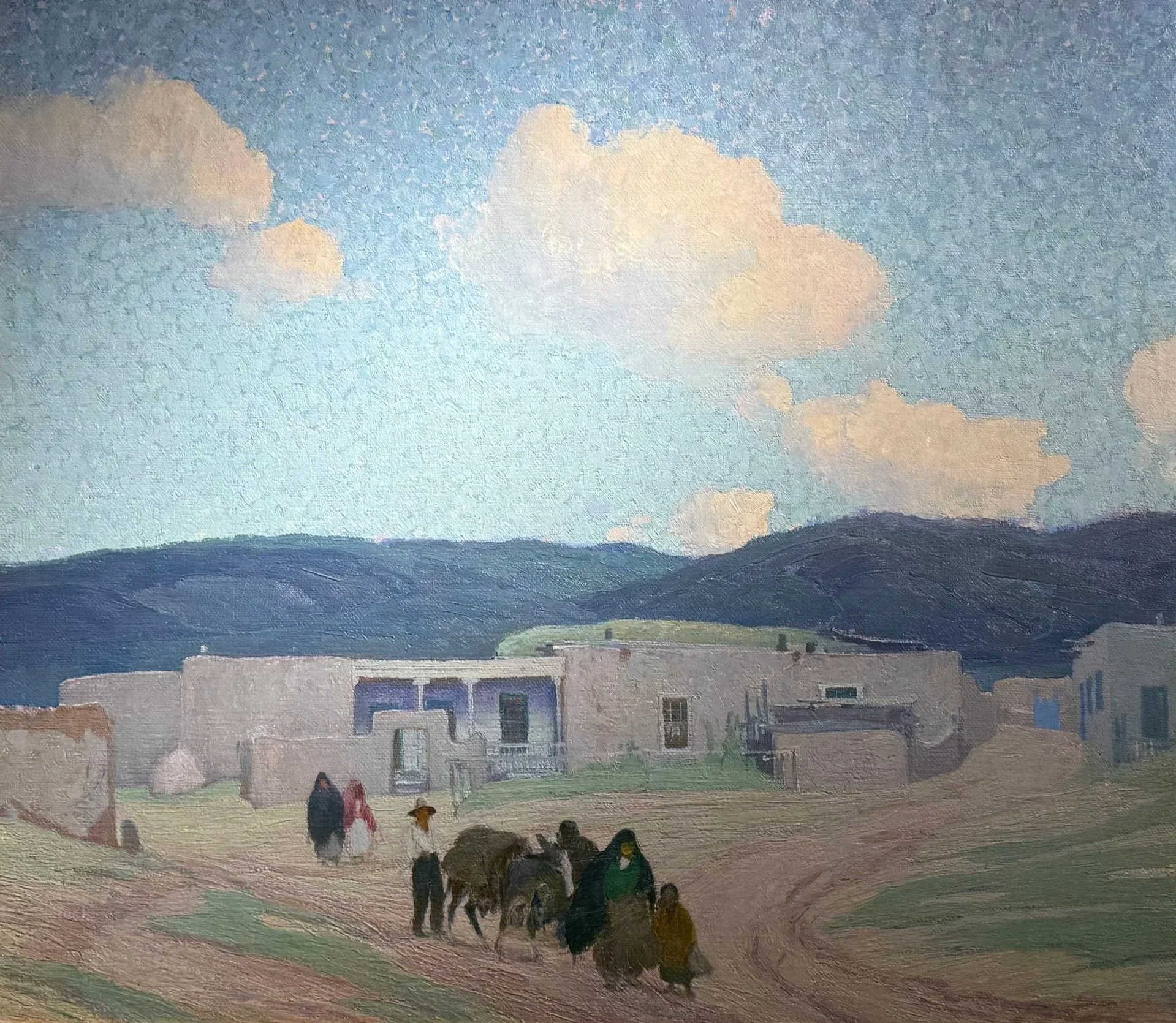
The paintings in this exhibition tell a range of stories about the various communities in Taos in the early twentieth century. We see Hispano workers plastering homes and tending sheep; Indigenous people drying chiles at Taos Pueblo, hunting rabbits, and fishing; Anglo-American artists and settlers; portraits of individuals and families. Locations range from small-town street scenes and a rural Catholic chapel to tipis on the Great Plains, from the lush fields of the lower Rio Hondo to the open horizon of Taos valley ringed by snow capped peaks.
These depictions, and many others created by members of the TSA throughout their extensive careers, conveyed to the American public a new image of itself. They showed the culturally and physically diverse world these artists encountered when they arrived in Taos, including not only “Anglo-Americans” like themselves but Native Americans and Nuevomexicanos.
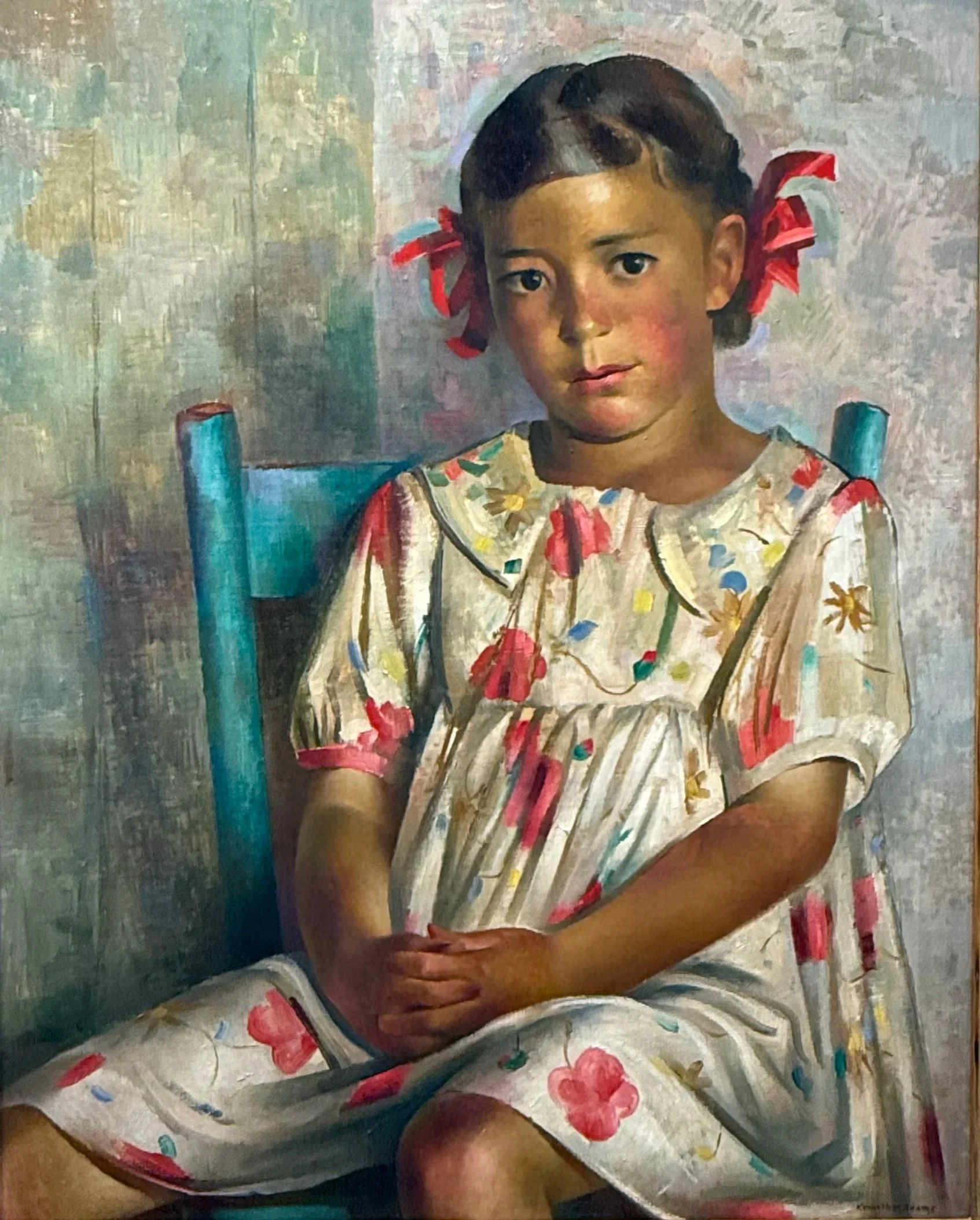
The TSA translated feelings of wonder and delight into paintings they sent out across North America in their group exhibitions. Artworks were shown not only in art galleries in New York, Chicago, and other major American cities but also in venues that reached even more people, such as department stores and fraternal organizations. Viewers of these exhibitions encountered images of cultures within the territory of the United States that long predated 1776 and even the earliest English settlements.
Prints and drawings by the artists also were disseminated widely through magazine illustrations, advertising, and Santa Fe Railway calendars, to name just a few examples. They depicted American individuals, American landscapes, American homes and families, American workers, and American architecture previously unfamiliar to most people living in the USA.
TSA members’ interpretations of their neighbors, New Mexico land, and local architecture became part and parcel of how other citizens saw our region. Whether or not the Taos Society of Artists succeeded in forging an “authentically” American art, the images created by its members expanded the definition of what it meant to be American.